
NT
Panthera onca
Jaguar
jaguarete
The largest cat in the Americas and a symbol of Paraguay's wild forests; scarce and very hard to see.
Nature
Paraguay has no coastline, but it has the nature of an entire continent. Within its borders you'll find the Chaco, the southern tip of the Pantanal, the Cerrado, the last remnants of the Upper Paraná Atlantic Forest and the great marshes of the south. This is home to the jaguar, the giant armadillo, the maned wolf and the Chacoan peccary, or taguá, a species known only from fossils until 1975, when scientists confirmed it was still alive in the Chaco. More than 700 bird species have been recorded here. Many of these landscapes are under threat, and traveling with local guides is one way to help protect them. It pays to follow the seasons: the pink lapacho (tajy) in bloom at the end of winter, the bellbird calling in spring, and flamingos on the Chaco's salt lagoons.
Panthera onca
jaguarete
The largest cat in the Americas and a symbol of Paraguay's wild forests; scarce and very hard to see.

Priodontes maximus
tatu carreta
The world's largest armadillo, a nocturnal digger that almost no one ever gets to see.

Catagonus wagneri
tagua
The Chaco's “living fossil”: known only from fossils until it turned up alive in the 1970s.

Chrysocyon brachyurus
aguara guasu
South America's largest canid: reddish coat, black mane and extra-long legs for seeing over the tall grass.

Tapirus terrestris
mborevi
The country's largest land mammal, a strong swimmer and a planter of forest seeds.

Hydrochoerus hydrochaeris
kapi'yva
The world's largest rodent, calm and sociable; you'll see it in almost any wetland.

Alouatta caraya
karaja
The southernmost primate in the Americas; its dawn roars carry over great distances.
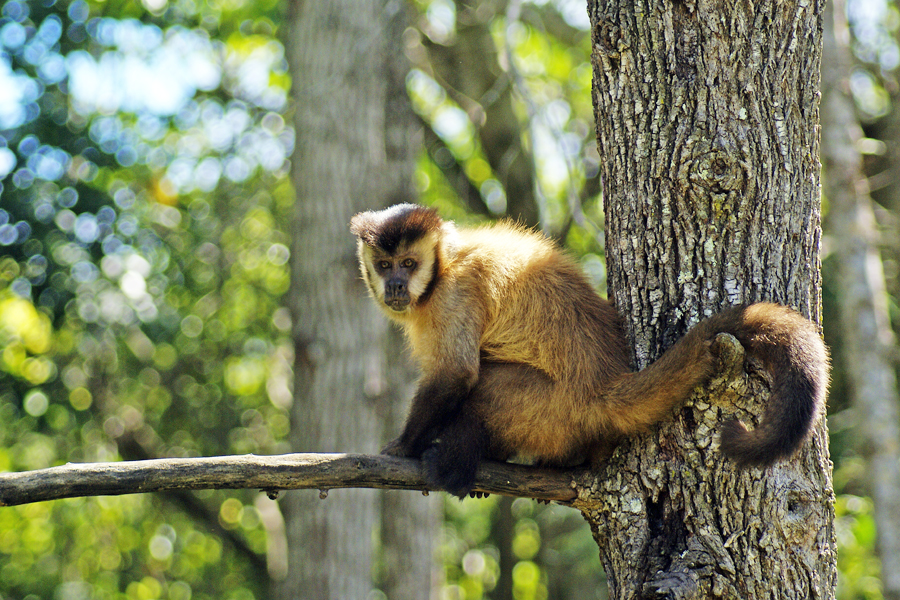
Sapajus cay
ka'i
A small, curious and intelligent monkey of the eastern and northern forests.

Myrmecophaga tridactyla
jurumi
A flag-like tail, an extra-long snout and a sticky tongue: the great devourer of ants and termites.

Nasua nasua
kuati
A long snout and a ringed tail always held high: a restless neighbor in the eastern forests.

Leopardus pardalis
jaguarete'i
A medium-sized cat with chain-patterned spots, nocturnal and stealthy.

Puma concolor
jagua pytã
The second-largest cat in the Americas, plain tawny in color; it adapts to almost any habitat.

Blastocerus dichotomus
guasu puku
South America's largest deer, with branching antlers and black legs: king of the marshes.

Tayassu pecari
tañykati
A white-jawed peccary that roams the forest in large, noisy herds.

Aotus azarae
ka'i pyhare
The region's only nocturnal monkey, with huge eyes; in the Chaco it is also active by day.

Tolypeutes matacus
tatu boli
The armadillo that rolls itself into a perfect ball for defense.

Lama guanicoe
An Andean camelid in the middle of the Chaco: the small population of the northwestern dunes.

Cerdocyon thous
aguara'i
The country's most common wild canid, often seen at nightfall on roads and estancias.

Caiman yacare
jakare hũ
The most common caiman in Paraguay's rivers and marshes, dark and heavily armored.

Caiman latirostris
jakare tĩ
A caiman with a wide snout and green-and-gray mottled skin; scarcer than the yacare caiman.

Eunectes notaeus
kuriju
The great snake of the wetlands: non-venomous, it kills by constriction and is an excellent swimmer.

Salvator merianae
teju guasu
The big, spotted lizard that crosses trails, yards and parks on hot days.

Chelonoidis chilensis
karumbe
A land tortoise of the Chaco's dry scrub, frequently taken for the pet trade.

Bothrops diporus
jarara
A venomous viper common in fields and forests; knowing and respecting it is the best prevention.

Rhea americana
ñandu
The largest bird in the Americas: it can't fly, but it runs at great speed across grasslands and savannas.

Jabiru mycteria
tujuju
The largest stork in the Americas: white, with a black head and an unmistakable red collar.

Ramphastos toco
tukã
The largest toucan, with a huge orange bill; it frequents forests, savannas and even gardens.

Anodorhynchus hyacinthinus
gua'a hovy
The world's largest flying parrot, an intense cobalt blue; in Paraguay it is scarce and found only in the north.

Procnias nudicollis
guyra campana
Paraguay's national bird since 2004. Its metallic call rings through the Atlantic Forest.

Phoenicopterus chilensis
Pink flocks on the salt lagoons of the Central Chaco, an unexpected spectacle in the heart of Paraguay.

Harpia harpyja
taguato ruvicha
The largest eagle in the Southern Hemisphere, a hunter of monkeys in the forest canopy; extremely rare in Paraguay.

Chauna torquata
chahã
The noisy sentinel of the marshes: it cries “chajá” and warns everyone when someone approaches.
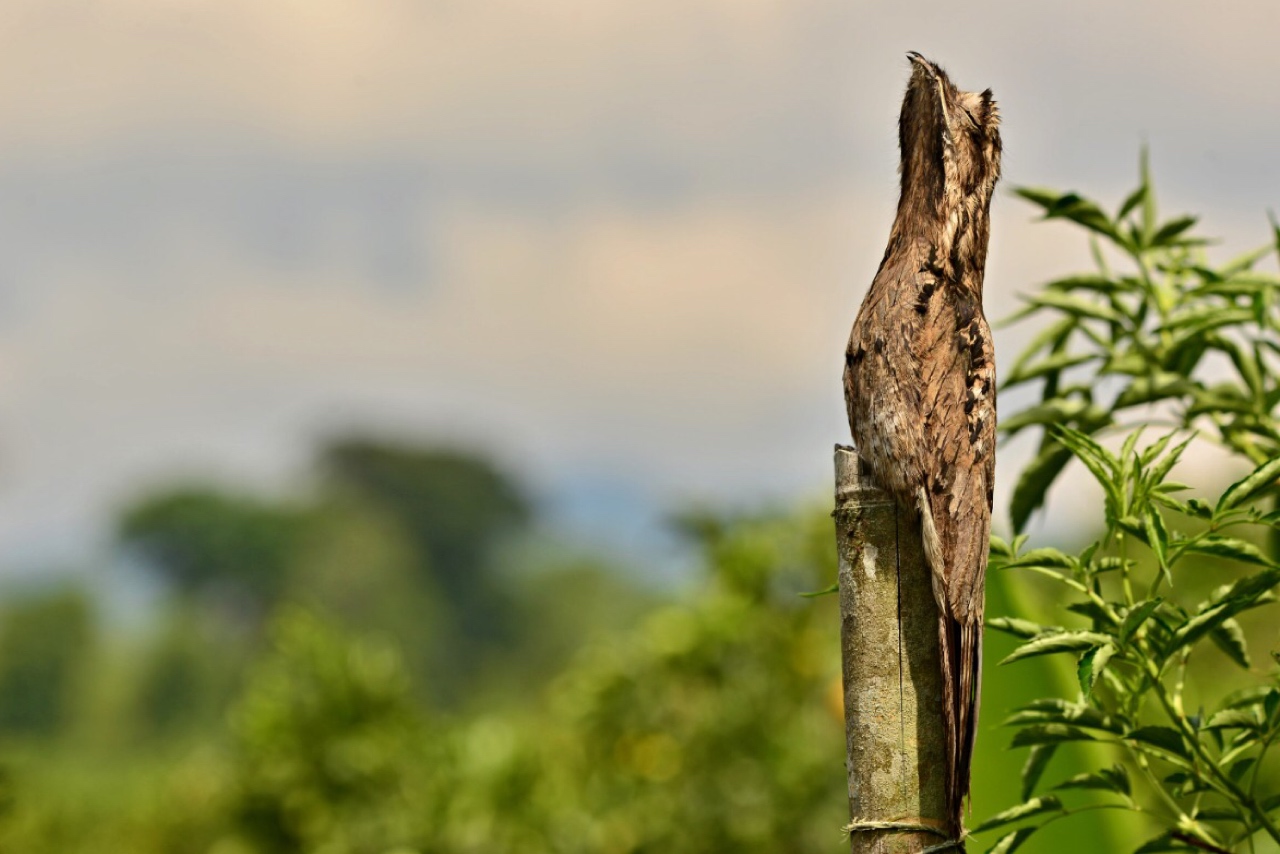
Nyctibius griseus
urutau
The bird that disguises itself as a branch and sings at night with a lament that gave rise to legends.

Platalea ajaja
ajaja
A pink bird with a spoon-shaped bill that “sweeps” the mud of the marshes for food.

Amazona aestiva
A green parrot with a blue forehead and yellow face, heavily targeted by the pet trade.

Pipile jacutinga
jakutinga
A black forest guan with a white face and red-and-blue wattle, a threatened jewel of the Atlantic Forest.

Pseudoplatystoma corruscans y Pseudoplatystoma reticulatum
suruvi
The great catfish of the Paraguay and Paraná rivers, prized by anglers and cooks alike.

Salminus brasiliensis
piraju
The “tiger of the rivers”: a golden, hard-fighting fish and the ultimate sport-fishing trophy.

Piaractus mesopotamicus
paku
A round, flat fish with delicious flesh, the vegetarian cousin of the piranha.

Pygocentrus nattereri
Red-bellied and sharp-toothed, more feared than dangerous, but worth respecting.

Morpho helenor
panambi
A flash of metallic blue among the trees: the most striking butterfly of the eastern forests.

Tetragonisca fiebrigi (antes incluida en T. angustula)
jate'i
A tiny native stingless bee whose honey has been used for centuries as a home remedy.

Phyllomedusa sauvagii
A Chaco frog that walks like a monkey and “waxes” its skin to avoid drying out.