 Charles J. Sharp · CC BY-SA 4.0
Paraguay wildlife: jaguar, the Chaco and the Paraguayan Pantanal
Paraguay's wildlife is extraordinary, but keep expectations realistic: the jaguar (yaguareté) survives in the dry Chaco, the Pantanal and the Mbaracayú forest and is almost impossible to see. Capybaras, caimans, jabiru storks, rheas and, in winter, flamingos on the Chaco's salt lagoons are far easier.
The country combines the Chaco, the southern tip of the Pantanal (the Paraguayan Pantanal), the Cerrado and the Atlantic Forest, with more than 700 bird species. Most of the best sites are remote, with dirt roads and little cell signal, so the season and the guide matter as much as the destination.
Updated · 2026-09-29
Jaguar: what to realistically expect
The jaguar is listed as near threatened worldwide, but the national list rates it critically endangered. It lives in Defensores del Chaco National Park, the Alto Paraguay Pantanal and the Mbaracayú Reserve, and can only be visited with guides and rangers. Its tracks are easier to find than the animal.
To see one up close, honestly, there is Tekotopa, Itaipú's environmental center in Hernandarias, opened in 2025: its Jaguar Trail (1.6 km) has enclosures with jaguar, puma and tapir. It is free with a reservation and closed on Tuesdays. These are animals in enclosures, not wild ones.
Hernandarias · Alto Paraná
Tekotopa Centro Ambiental (Sendero del Jaguareté y Museo de Itaipu Tierra Guaraní)
Jaguars, tapirs and harpy eagles of the Atlantic Forest, plus Itaipú's great museum of nature and Guaraní culture.

Jaguar
The largest cat in the Americas and a symbol of Paraguay's wild forests; scarce and very hard to see.

Alto Paraguay y Boquerón
Parque Nacional Defensores del Chaco
The country's largest protected area: pure Dry Chaco, with the Cerro León massif rising from the plain.

Canindeyú
Reserva Natural del Bosque Mbaracayú
The largest remnant of Atlantic Forest in the country and Paraguay's most biodiverse place, a UNESCO biosphere reserve.
The Chaco: flamingos, chacoan peccary and palm savannas
Along the Transchaco road, without leaving the car, you will see karanda'y palm savannas, marshes and animals like capybaras, jabirus and rheas. The salt lagoons of the Central Chaco (Laguna Capitán, Laguna Chaco Lodge) host Chilean flamingos and coscoroba swans from May to September; numbers vary with the water level and visits must be arranged in advance.
The Chacoan peccary (taguá), known only from fossils until it was found alive (published in 1975), can be seen in captivity at Fortín Toledo, by reservation. In the wild it lives in the deep dry Chaco, which requires a 4x4 and notice to the environment ministry.

The Chaco and the Pantanal
Mennonite Chaco and the Chaco War
Colonies, forts, flamingos, and the endless sky of the Central Chaco

Chilean flamingo
Pink flocks on the salt lagoons of the Central Chaco, an unexpected spectacle in the heart of Paraguay.

Chacoan peccary (taguá)
The Chaco's “living fossil”: known only from fossils until it turned up alive in the 1970s.

Capybara
The world's largest rodent, calm and sociable; you'll see it in almost any wetland.

Jabiru
The largest stork in the Americas: white, with a black head and an unmistakable red collar.
Presidente Hayes
Reserva Laguna Capitán
Salt lagoons in the Central Chaco with flamingos, spoonbills and shorebirds, on land owned by the Chortitzer cooperative.
The Paraguayan Pantanal: Bahía Negra and Tres Gigantes
The Paraguayan Pantanal sits in the far northeast of the Chaco. Bahía Negra is the base: boats leave its port to see caimans, capybaras and jabiru storks. About 40 km away, reachable only by boat, is the Tres Gigantes Biological Station (Guyra Paraguay), where with patience you may see caimans, marsh deer and giant otters; with great luck, the jaguar. Capacity is very small.
Go from July to October, in the dry season. With just a few millimeters of rain, dirt roads close, and from August to October there is fire risk. Buses and flights change often: verify everything.
Bahía Negra · Alto Paraguay
Bahía Negra y el Pantanal paraguayo
The last Paraguayan town upriver: caimans, capybaras, otters and Yshir culture in the Pantanal.

Bahía Negra (río Negro) · Alto Paraguay
Estación Biológica Los Tres Gigantes
A Pantanal reserve reachable only by boat, named after the giant otter, the giant anteater and the giant armadillo.
The Chaco and the Pantanal
The Paraguayan Pantanal: Fuerte Olimpo and Bahía Negra
An expedition into the continent's largest wetland, with caimans, wood storks, and river life
Alto Paraguay
Parque Nacional Río Negro
The protected Paraguayan Pantanal: karanda'y palm groves, flooded forests and wetland wildlife along the Negro River.

Marsh deer
South America's largest deer, with branching antlers and black legs: king of the marshes.
Birds and the Atlantic Forest
The Bay of Asunción has 269 recorded species, including shorebirds arriving from North America. The Mbaracayú Reserve, with about 400 species, is the largest remnant of Atlantic Forest: bellbird (the national bird), tapir and jaguar. Laguna Blanca, in the Cerrado, adds 283 species. The best general season is spring (September to November); winter is better for the Chaco. Mbaracayú must be booked with the Moisés Bertoni Foundation, which recommends at least two nights.

Asunción · Asunción (Distrito Capital)
Bahía de Asunción y Reserva Ecológica Banco San Miguel
The bay where Asunción was born is now a sanctuary for shorebirds that fly in from the Arctic.
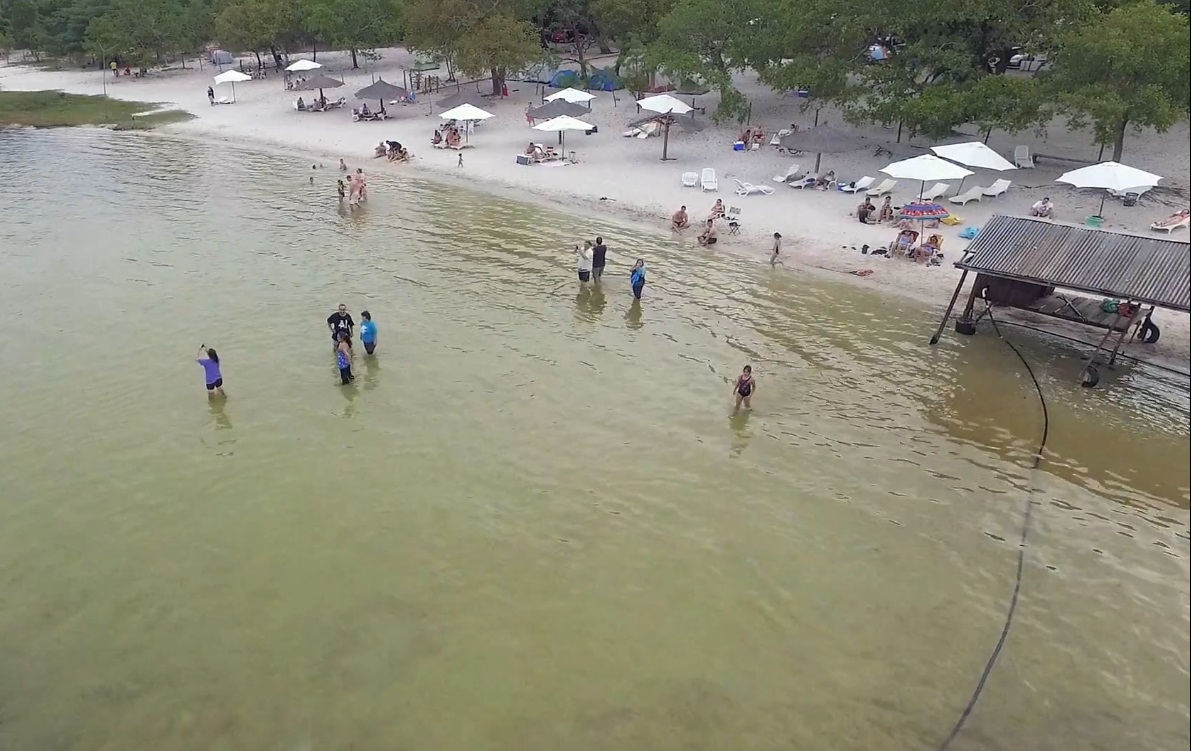
Santa Rosa del Aguaray · San Pedro
Laguna Blanca
White sand, see-through water and cerrado all around: Paraguay's most unexpected beach.
Asunción, the capital · The North: river, hills and history · The East: water, energy and borderlands
Birds and Nature: Asunción Bay, Laguna Blanca, and Mbaracayú
Arctic shorebirds, cerrado savanna, and the country's largest stretch of Atlantic Forest

Bare-throated bellbird
Paraguay's national bird since 2004. Its metallic call rings through the Atlantic Forest.
When to go and how to travel well
- Chaco: May to September. In summer it exceeds 40 °C and rain cuts the roads.
- Hire local guides, and bring a 4x4, water and spare fuel.
- Use repellent and closed shoes: there are pit vipers (yarará), ticks and mosquitoes.
- Drive slowly at dawn and dusk: anteaters, foxes and armadillos cross the road.
- Do not buy animals, skins or feathers: it is prohibited by wildlife law.
- Check vaccinations (the CDC recommends yellow fever outside Asunción).

Boquerón
Parque Nacional Teniente Agripino Enciso
The Dry Chaco right beside the Transchaco: thorn forest, Chacoan peccaries and Chaco War trenches.

Giant armadillo
The world's largest armadillo, a nocturnal digger that almost no one ever gets to see.

Maned wolf
South America's largest canid: reddish coat, black mane and extra-long legs for seeing over the tall grass.
Frequently asked questions
Can you see a jaguar in Paraguay?
In the wild it is very rare and only with guides. In captivity, Tekotopa's Jaguar Trail in Hernandarias is free with a reservation.
Is there a Pantanal in Paraguay?
Yes, the Paraguayan Pantanal is in Alto Paraguay, with Bahía Negra as the base. It is best visited from July to October.
How many bird species does Paraguay have?
More than 700 registered species, according to Guyra Paraguay; the South American checklist confirms 694.
Can you visit the Chaco on your own?
To the Central Chaco, yes: the Transchaco is paved. Beyond it, toward the parks or the Pantanal, take a guide and a 4x4.
Don't know where to start?
Answer five questions and we will build an itinerary around your dates.
Keep reading

The Chaco
Mennonites in Paraguay: the Chaco colonies
Mennonites in Paraguay: the story of Filadelfia, Loma Plata and Neuland, what to see, how to get there on the Transchaco and how to visit respectfully.

Itineraries
Paraguay itinerary: 3, 7 and 10 day plans
Paraguay itinerary day by day: 3, 7 and 10 day plans covering Asunción, Jesuit missions, Encarnación, Itaipú and the Chaco. How many days you really need.

When to go
What is the best time to visit Paraguay?
The best time to visit Paraguay is April to June and August to October. Weather by month, festivals, blooming lapachos and when to avoid the heat.