 Ulises Icardi · CC BY-SA 4.0
Arroyos Tagatiyá
Turquoise water over a limestone bed: the 'Paraguayan Bonito', where you float among the fish.
What it is
In the San Alfredo district, three streams — the Tagatiyá, the Tagatiyá-mí and the Tagatiyá Guasu — flow over a limestone bed that leaves the water so clear you can see fish darting between the stones. The colors shift from turquoise to green beneath a dense canopy of native trees, bamboo and ferns. The municipality counts six swimming spots (balnearios), all on private land and with a modest entry fee, where natural pools form for swimming, snorkeling or simply floating in cool water in the thick of the northern heat. Some offer camping, rooms and meals; this is Paraguay's great freshwater secret.
What to see and do
- Swimming and snorkeling among fish in the crystal-clear pools
- Photographing the turquoise and green hues (a drone shows off the gallery forest)
- Swimming spots such as La Blanca, Santa Irene and Tres Mangos, reached from PY22
- Camping by the stream at the swimming spots that allow it
Did you know…?
The clarity comes from the limestone bed, just as in Bonito (Mato Grosso do Sul), which is why it's nicknamed the 'Paraguayan Bonito'.
The streams rise and flow around Serranía San Luis National Park.
The water stays cool even when it's 35 °C outside.
History
San Alfredo grew from the 1930s with the arrival of a Salesian mission and logging; it got its name in 1955, in honor of the then-president Alfredo Stroessner, and became a district in 2013. The paving of the road north, around 2014, opened up the streams, which within a few years went from local secret to sought-after summer destination.
Tips
- Most swimming spots charge a modest entry fee (around ₲ 10,000 in recent years); bring cash. Check before you go.
- The last few kilometers are dirt road: after heavy rain the going gets tough and the water can turn cloudy.
- Take all your trash with you: it's the landowners' condition for staying open.
- Some spots require a booking or permission; others, such as La Blanca, Santa Irene and Tres Mangos, have been open to the public without reservations. Ask before you go.
Daytime hours, varying by swimming spot; check before you go.
Best time: November to March, when the cool water is a relief; January weekends and public holidays get crowded. From April to October it's quieter, but the water feels icy.
What to try
- An asado (barbecue) by the stream, at the swimming spots' grill shelters
- Chipa and tereré (iced yerba mate) with medicinal herbs for the road
Activities
Nearby
San Carlos del Apa · Concepción
Parque Nacional Serranía San Luis
Limestone hills, cerrado and forest where blue and red macaws take flight.
Puerto Pinasco · Presidente Hayes
Puerto Pinasco
A former tannin port on the Paraguay River, where the idea for Friendship Day on July 30 was born.
San Carlos del Apa · Concepción
Parque Nacional Paso Bravo y San Carlos del Apa
More than 100,000 hectares of protected cerrado on the banks of the Apa River, on the border with Brazil.
Concepción · Concepción
Concepción
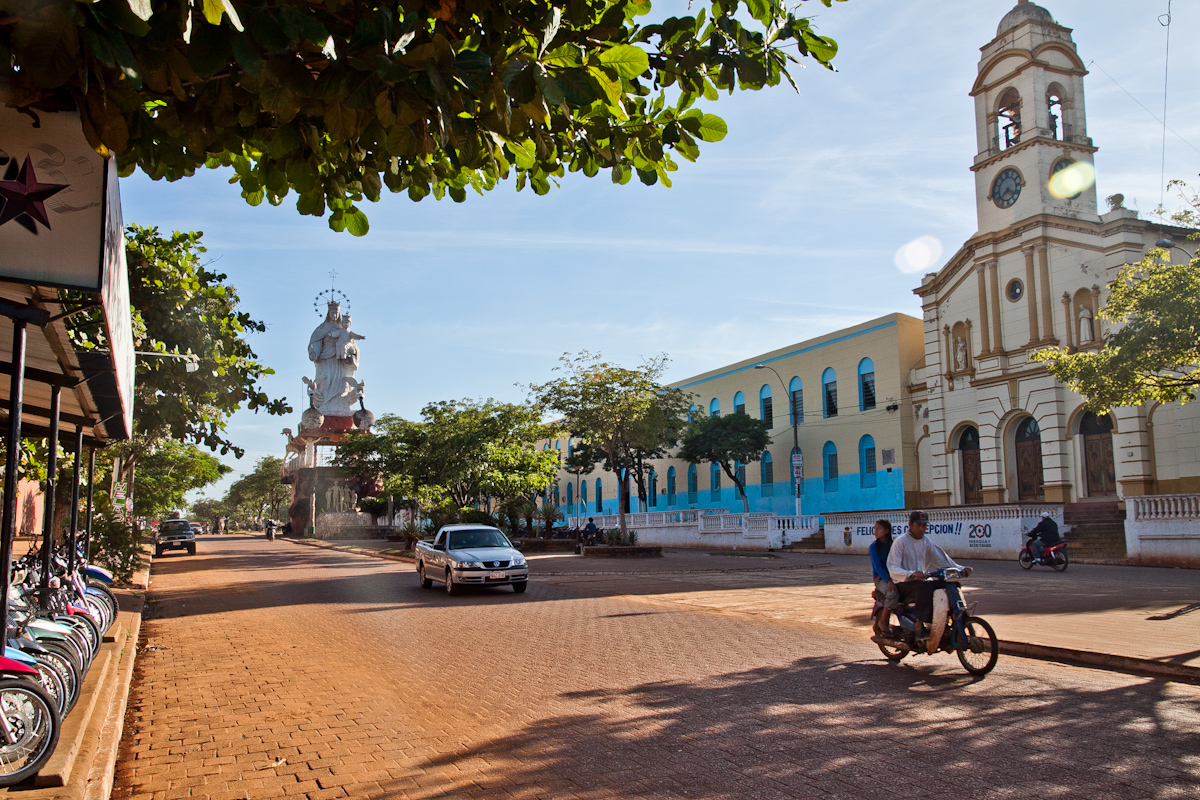
The Pearl of the North: grand old mansions, a port with fiery sunsets and a gateway to the Paraguay River.

Concepción · Concepción
Navegación por el río Paraguay desde Concepción
Days of river, herons and fishing: the Paraguay upstream, bound for the Chaco and the Pantanal.

Puerto Casado · Alto Paraguay
Puerto Casado (Puerto La Victoria)
A tannin town on the Paraguay River, with the old Carlos Casado factory and the railway that opened up the Chaco.
Researched and reviewed in September 2026 with 5 sources. A second reviewer checked dates, coordinates and lodging. Hours and prices may change.